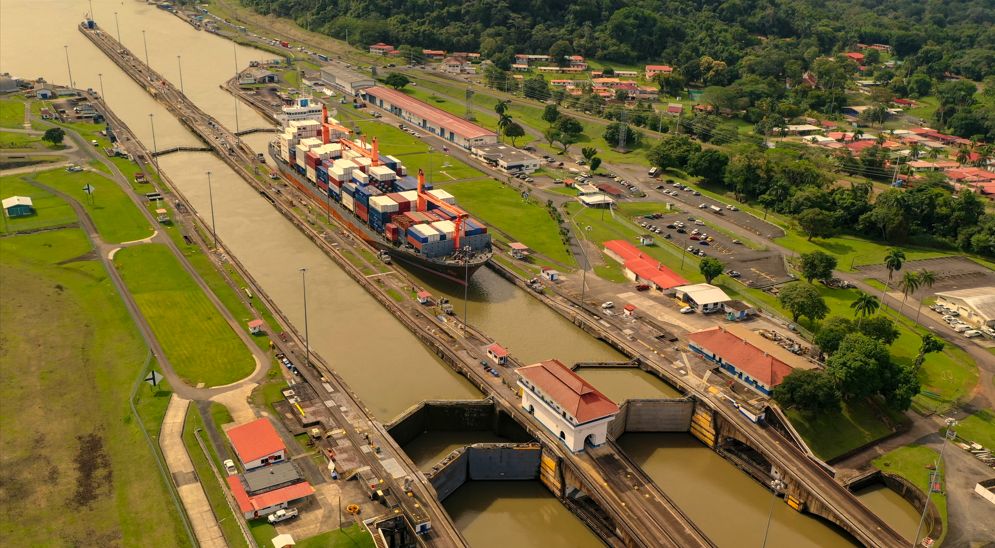
Drought, disrupted energy flows, record auction prices: in 2026, transiting the Panama Canal has become a real challenge for liner services. Marfret is temporarily adapting the organisation of its South Pacific service.
Eighty kilometres between the Atlantic and the Pacific, and a century-old waterway through which a vital share of world trade passes. For our NASP service, which connects Europe and the United States with Tahiti, New Caledonia, Australia and New Zealand, there is no real alternative: sailing around South America would add several days to the voyage. The canal is therefore essential. This year, it is also one of the most contested passages on the planet.
A canal under pressure on two fronts
The canal runs on fresh water, and water is the first thing to run short. The El Niño climate phenomenon disrupts rainfall patterns around the world and can bring more severe dry spells to Central America. Lower rainfall then depletes the reserves of Gatún Lake, which the canal depends on. To preserve this resource, the Panama Canal Authority has reduced the number of daily transits.
On top of this natural constraint came a shockwave from the Middle East. Tensions around the Strait of Hormuz have pushed Asian buyers towards American gas and oil, exported from the Gulf of Mexico and shipped to Asia via Panama. LNG carriers and tankers have crowded the canal’s approaches just as its capacity was tightening.
Auctions take over
To transit the canal, vessels book a passage slot in advance, allocated according to a ranking: the more transits a shipowner makes each year, the higher its ranking. Once the slots available for booking are taken, only one option remains: last-minute auctions. To keep its sailings on schedule, Marfret has had to take part in these auctions on several occasions. Prices have reached unprecedented levels this year, and the chances of winning are increasingly uncertain.
To prevent these uncertainties from undermining the regularity of the service, Marfret has decided to temporarily reorganise it with CMA CGM, its partner on this route.
Since the Melbourne call on 20 October, and for twelve months, the Marius has been chartered to CMA CGM. The 2,500 TEU container ship, owned by Marfret, now benefits from our partner’s ranking, making it easier to secure passage slots. “Our customers expect reliability from us, whatever the market turbulence. That commitment is what guided our decision,” says Guillaume Vidil, CEO of Marfret.
For our customers, nothing changes: Marfret continues to market its space on board and remains their point of contact. Their cargo, including refrigerated goods, continues to be handled with the utmost care by our teams.